Decide what is shared
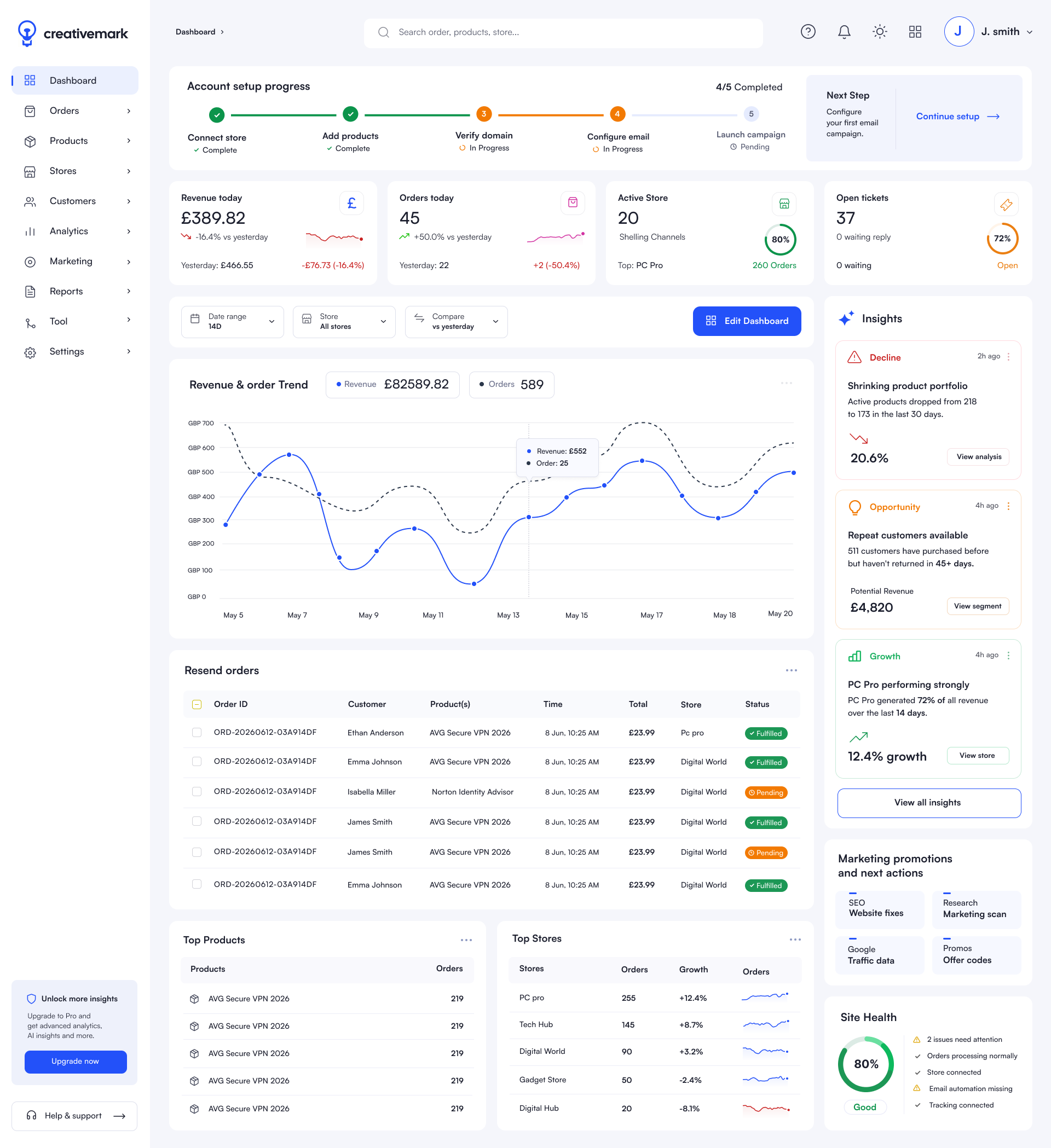
A second store does not have to mean a second product database. Decide which product descriptions, files and licence pools can be shared, and where the offer needs to differ. A publisher's reader offer may use the same software as a specialist store while needing its own branding, price and customer communications.
Keep the customer journey local
Check the storefront, basket, checkout, account and support links under each store's own identity. A customer should not have to understand your internal account structure to download a purchase. With Creativemark, products can be assigned to stores while store settings control the branded experience.
Compare like with like
Review paid orders, refunds and product performance over the same period. A larger store will usually lead on revenue, but a smaller one may have a stronger product mix or fewer support issues. Separate currencies and distinguish revenue from order counts before drawing conclusions.
Give teams the right access
Assign access around responsibility, not convenience. Support needs order and delivery context; a store manager needs catalogue and commercial information. Keep buyer portals separate from merchant administration, and review permissions as stores and teams change.